

How to choose wall anchors for heavy loads
Choosing wall anchors for heavy loads starts with understanding the wall, the load, and the fixing conditions. A heavy-duty shelf, commercial mirror, storage cabinet, handrail, or wall-mounted dispenser can fail if the anchor is poorly matched to the substrate. For business premises, reliable fixing protects equipment, staff, visitors, and the building surface itself. The strongest anchor is not always the best choice, because its performance depends on what sits behind the finished wall.
Start by identifying the wall material
Wall anchors behave very differently in solid masonry, concrete, plasterboard, hollow block, and timber framing. Before selecting a product, inspect the wall carefully. Drawings, maintenance records, a stud finder, and small test holes can help you confirm the substrate without causing unnecessary damage.
Solid concrete and dense brick support high loads
Concrete and solid brick are suitable for high-capacity mechanical anchors, including sleeve anchors, shield anchors, and concrete screws. These systems expand or cut into the substrate, creating a strong mechanical hold.
For shelving brackets, industrial signage, pipe supports, or wall-mounted machinery, choose an anchor with a published load rating for the specific base material. Drilling depth and hole diameter must match the manufacturer’s guidance exactly. Dust left inside the drilled hole can reduce grip, so clean holes with a brush and blower before installation.
Hollow walls need a different approach
Plasterboard and hollow partition walls require specialist anchors because there is little material for a conventional plug to grip. Toggle bolts, spring toggles, and metal cavity anchors spread the load across a wider area behind the board.
A single plasterboard fixing may be unsuitable for a very heavy item, even when the anchor has a high stated rating. Whenever possible, fix through the board into timber studs or metal framing. For wide fixtures such as storage rails or television brackets, use several fixing points and distribute the weight evenly.
The principles in How to choose the right contractor grade fasteners can also help you compare screw types, coatings, and fixing materials for demanding site conditions.
Calculate the real load, not only the item weight
The stated weight of an object is only the starting point. A wall anchor may experience extra force when doors are opened, stock is loaded onto shelves, or people pull on a rail. A cabinet weighing 35 kg when empty could carry far more once filled with files, tools, or cleaning supplies.
Consider these factors before ordering anchors:
- The total weight of the mounted item and its contents
- The number and position of fixing points
- Pull-out force, downward shear force, and sideways movement
- Dynamic use, such as opening, lifting, or leaning
- Safety margins for commercial environments
- The condition and age of the wall
For critical installations, use a conservative safety margin rather than working at the anchor’s maximum listed capacity. Manufacturer ratings are often based on controlled tests, and real walls may contain weak mortar, voids, cracks, moisture damage, or uneven board thickness.
Choose the anchor style for the fixing task
Several anchor categories are commonly used for heavy loads. Each one has a practical role.
Mechanical anchors provide dependable masonry fixing
Expansion bolts and sleeve anchors are widely used in concrete and solid brick. Tightening the nut expands part of the anchor against the hole wall. They are suited to brackets and structural fittings where access is limited to the front face of the wall.
Concrete screws are another effective option. They cut threads into a pre-drilled hole and can be easier to remove or reposition than expansion anchors. Select corrosion-resistant finishes where fittings may be exposed to damp conditions, external entrances, or washdown areas.
Chemical anchors suit difficult substrates
Chemical anchoring systems use resin to bond threaded rods or studs into masonry. They are useful in cracked concrete, weak brickwork, hollow block, and locations close to an edge, provided the correct resin and mesh sleeve are used.
Installation quality matters greatly. The hole must be cleaned thoroughly, the resin mixed correctly, and the curing time respected before loading. Temperature can affect curing, so check the product data sheet before scheduling work.
Commercial maintenance teams that handle both fixing and weatherproofing can find compatible advice in How to select the best sealant for commercial repairs and maintenance. Sealants can protect penetrations from moisture, but they do not replace a properly rated anchor.
Install anchors with accurate tools and consistent technique
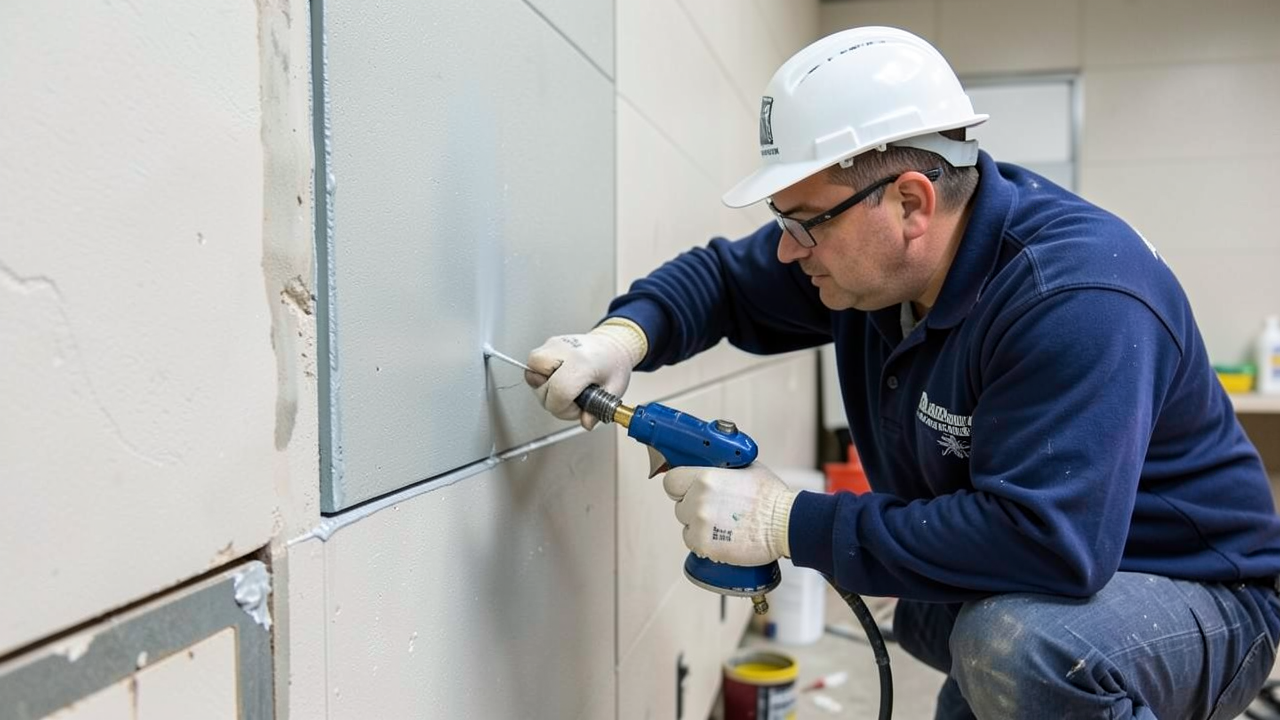
Even a premium anchor can fail after a poor installation. Use the correct drill bit type for the substrate. Masonry bits suit brick and block, while concrete may require an SDS drill for larger holes. Avoid oversized holes, as they reduce the anchor’s grip.
Mark all fixing points with a level before drilling. Check for hidden electrical cables, water pipes, and gas services using appropriate detection equipment. Where a fitting has multiple holes, drill and secure one point first, then recheck alignment before completing the remaining holes.
Tighten anchors to the recommended torque rather than overtightening them. Excessive force can damage plasterboard, crush soft brick, strip threads, or weaken an expansion mechanism. For high-value or safety-sensitive installations, retain product data and installation records for future maintenance.
Match hygiene requirements with secure wall mounting
In workplaces such as clinics, kitchens, care settings, and warehouses, wall-mounted dispensers and protective equipment stations must remain secure while allowing regular cleaning. Stainless steel fittings, corrosion-resistant screws, and wipeable mounting plates are often practical choices.
Where face mask dispensers or PPE storage units are part of the installation, How to choose disposable medical face masks offers useful guidance for selecting suitable supplies alongside the mounting hardware.
A secure fixing plan reduces avoidable risks
Before purchasing wall anchors for heavy loads, check these points:
- Confirm whether the wall is concrete, brick, block, plasterboard, or timber-framed.
- Calculate the loaded weight, including contents and regular handling forces.
- Select anchors rated for the actual substrate, not only the fixture weight.
- Use several fixing points where the design permits it.
- Follow drill diameter, embedment depth, cleaning, torque, and curing instructions.
- Seek specialist advice for structural loads, damaged walls, or public safety installations.
A well-selected wall anchor turns a potentially weak fixing point into a dependable part of your premises. By matching the anchor to the substrate and allowing a sensible safety margin, you can install heavy business equipment with greater confidence and fewer costly repairs.